|
Eager Space | Videos by Alpha | Videos by Date | All Video Text | Support | Community | About |
|---|

Welcome to eager space...
This is my semi-yearly review of the launch industry. The last full review of the industry and markets was in early 2025.
We'll start with SpaceX.
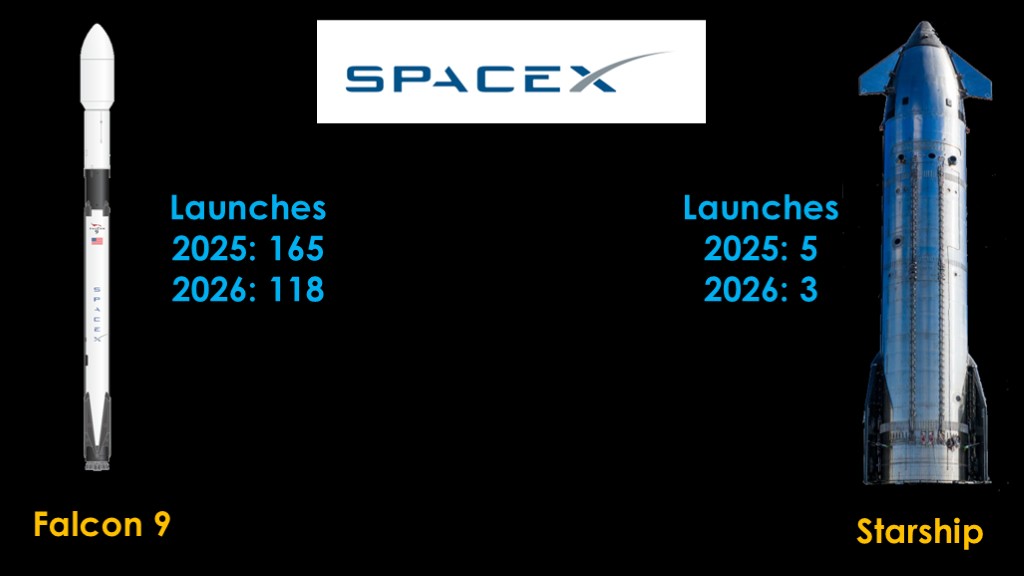
Falcon 9 launched 165 payloads in 2025 and so far this year has launched 118 payloads, a slightly reduced pace.
Starship launched 5 block 2 starships in 2025 and so far in 2026 has launched 3 block 3 starships, finally achieving orbit and launching functional starlink v3 satellites.
I expect that the next few years will be similar, so there's not much to talk about.
Wait, what?

Holy Cow.
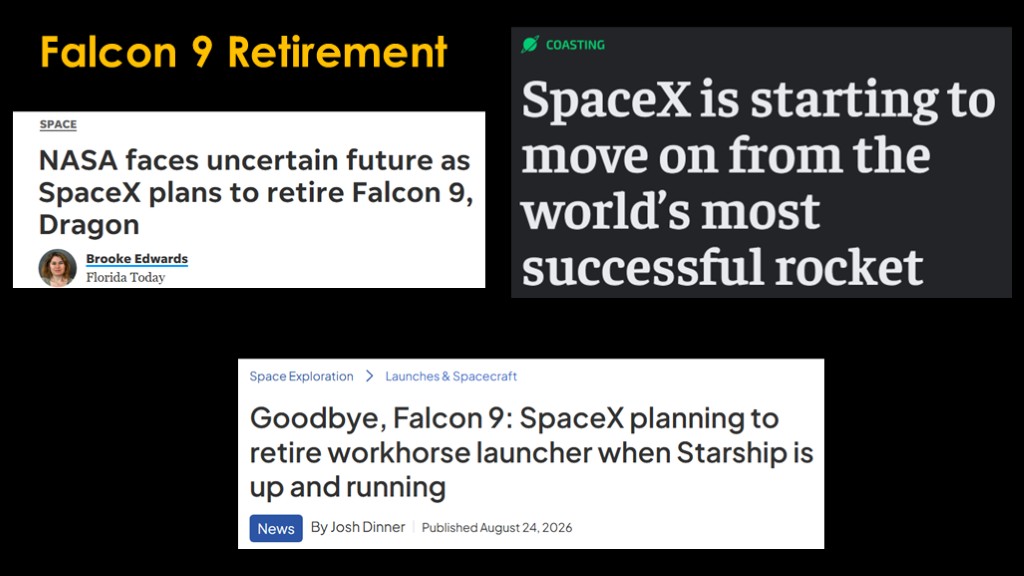
SpaceX announced a timeline for retiring Falcon 9. They'll fly out their NASA dragon commitment through 2030 - the current non-firm end date for ISS - and they might have some NSSL missions to fly for the department of defense, but that's it.
They are also planning to stop their very popular Falcon 9 rideshare flights by early 2029.
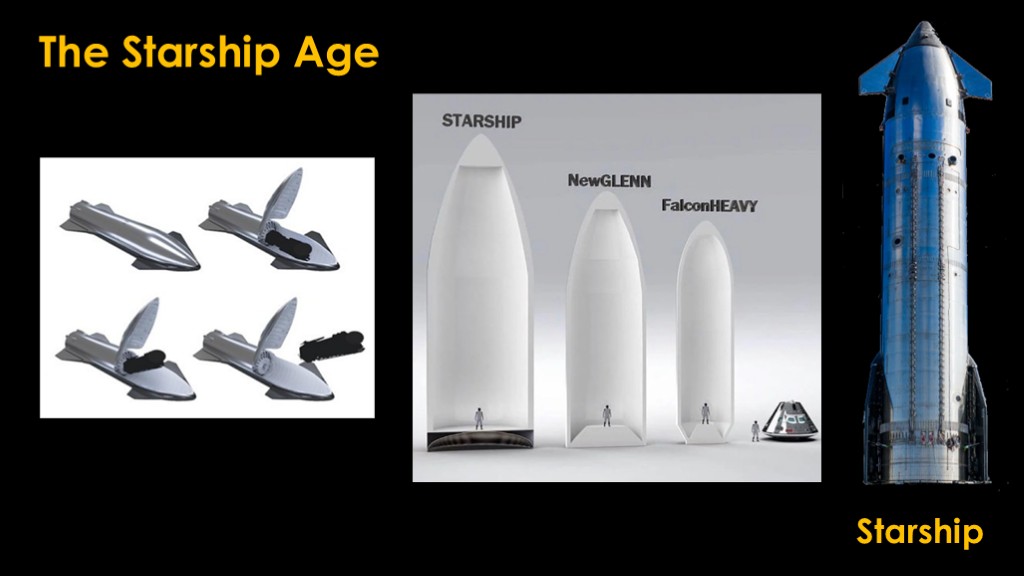
But maybe the retirement of Falcon 9 isn't that bad. We'll have Starship taking over for Falcon 9 and it's going to have a higher payload and be cheaper than Falcon 9.
That's great because the lower costs will spur an expansion of the space economy...
But... I suspect that's not exactly what the future will look like.
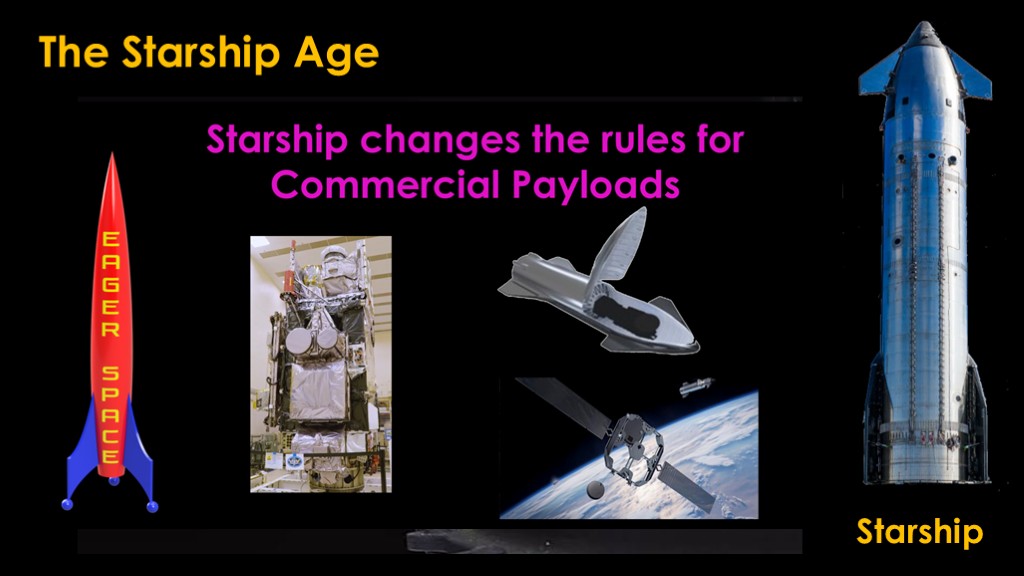
There is currently one payload deployment system for Starship and that's the PEZ dispenser they are using for starlink. It's gone through a lot of refinement across a number of flights.
We have seen no other payload deployment solutions being worked on.
I asserted in a recent video that SpaceX isn't going to do a traditional payload deployment solution in the next few years as they want to launch a ton of standardized satellites - starlinks or data centers - rather than launch a few satellites that each require specialized work to launch. Launching for themselves likely makes more money than launching for others - we certainly saw that with Falcon 9 and starlink though they obviously still did launches for others.
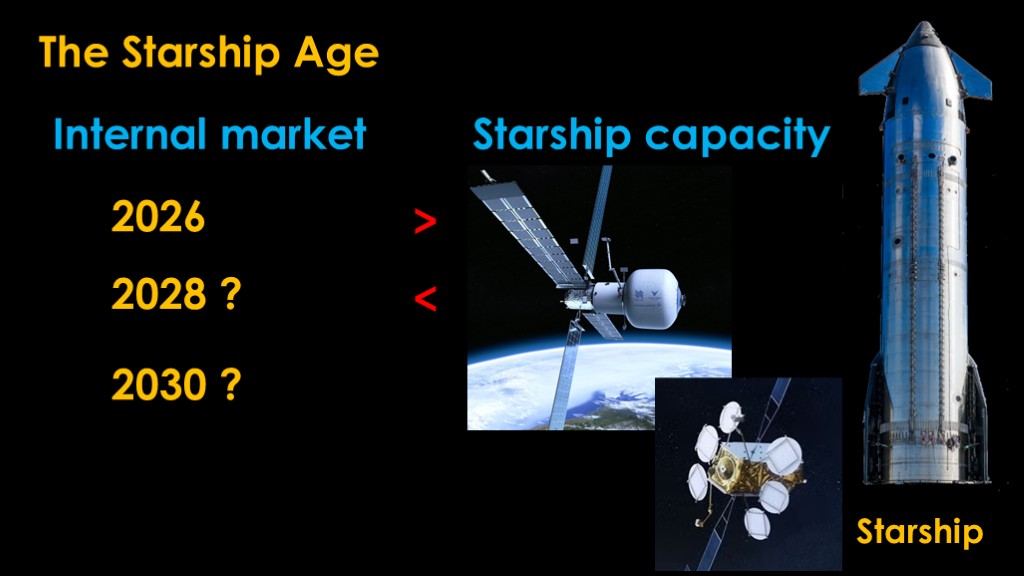
It's going to depend partly their internal market as compared to their starship launch capacity.
In 2026, their desire to launch v3 starlinks vastly exceeds the ability of starship to do those launches. They launched 26 satellites in September and will likely launch similar numbers in the last two launches for 2026.
Until they reach the starlink launch rate they want, they will use the vast majority of starship capacity for starlink and other SpaceX internal projects. The only exception I expect is launches having to do with the HLS lander for NASA.
It's hard to predict what starlink launch rate they want, but their Falcon 9 rate topped out at around 350 satellites per month, and that seems like a reasonable lower estimate. I don't know how to factor in their orbital data center plans.
We don't know how quickly they can ramp up starship launches. They are currently authorized to do 25 launches per year from Boca Chica and have asked for up to 456 launches per year. They are also working on two launch locations at cape Canaveral and are in the early stages in Louisiana, but it's not clear when those will come on line.
I'm going to toss out a date of 2028 for the point where their launch capacity is bigger than their internal market. At that point, they might launch payloads for other companies. Initially I expect those to be payloads that meet the PEZ flatpack standards as those can be launched with existing equipment and likely on flights carrying SpaceX satellites, as they do now when they launch Starshield satellites for the department of defense along with Starlink satellites.
Only after that point are they likely to launch other payloads, and I'm going to put 2030 on that timeframe. SpaceX reportedly has a $90 million contract to launch starlab on Starship, but it's not clear who would fly astronaut missions to starlab, and it looks like starlab could also launch on New Glenn 9x4. Is it worth SpaceX's time to develop, build, and test a starship version for starlab, or would it be better to put those resources somewhere else?
There's also a report that Japan's SuperBird 9 communications satellite will fly on Starship, but there's no reason it couldn't fly on New Glenn or Ariane 6.
I should probably note that "launch contract" means a lot of different things. It might be the kind of contract you make to launch on Falcon 9 or Ariane 6 with a specific quarter specified and likely a prepayment to reserve the spot.
Or it might be a "we're figuring out our rocket and you're figuring out your payload and lets see if we can get a general idea of how we might launch it for you" contract.
We are in a weird world now. A launch company wouldn't turn away customers. ...
But SpaceX isn't really a launch company any more...
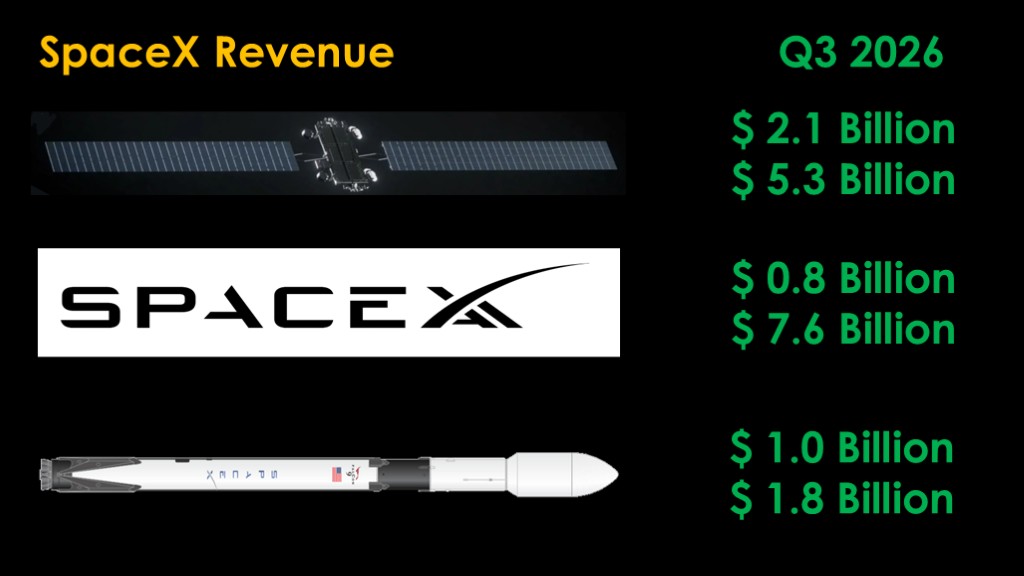
In 2025 the estimate was about $2.1 billion per quarter from Starlink.
The AI side - which also includes their social platform TwiX - was about $ 0.8 billion
The launch side was about a billion per quarter.
In quarter 3 2026, the launch revenue was a little better, at $1.8 billion
For Starlink it was $ 5.3 billion.
And the AI side - renamed to "Super Intelligence" - went to $7.6 billion and reportedly made $431 million in profit.
The launch side that we all know and love is now generating only about 12% of their revenue.
Not really a launch company. A company that owns rockets to launch its own payloads and currently launches some payloads for other people, but not a launch company.
That's why I'm not sure how they will behave.
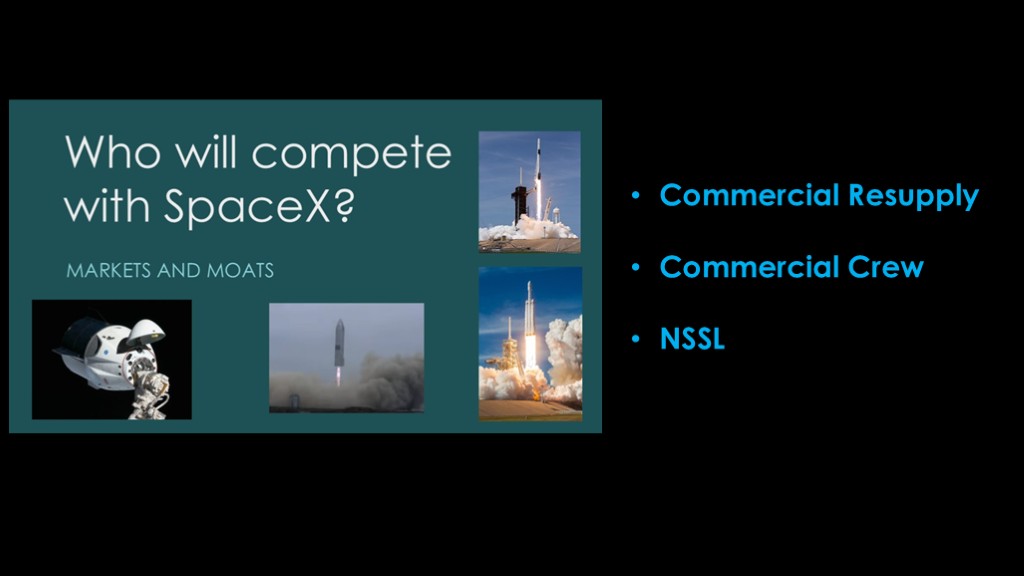
5 years ago I did a video where I talked about the moats that SpaceX owned that made them so hard to compete with.
The big ones were commercial resupply, commercial crew, and national security space launch. SpaceX had a lock on being the major provider in all of these, and they had lower costs than anybody else.
Nobody could really compete with them.
But those moats are gone. SpaceX is walking away from the first two and likely at least part of the third one.
That is understandably freaking a lot of launch customers out. It's freaking NASA out.
But it presents opportunity for the other companies, which we'll talk about now.
In 2025, I put rocket lab into the group of companies most likely to compete with spacex.
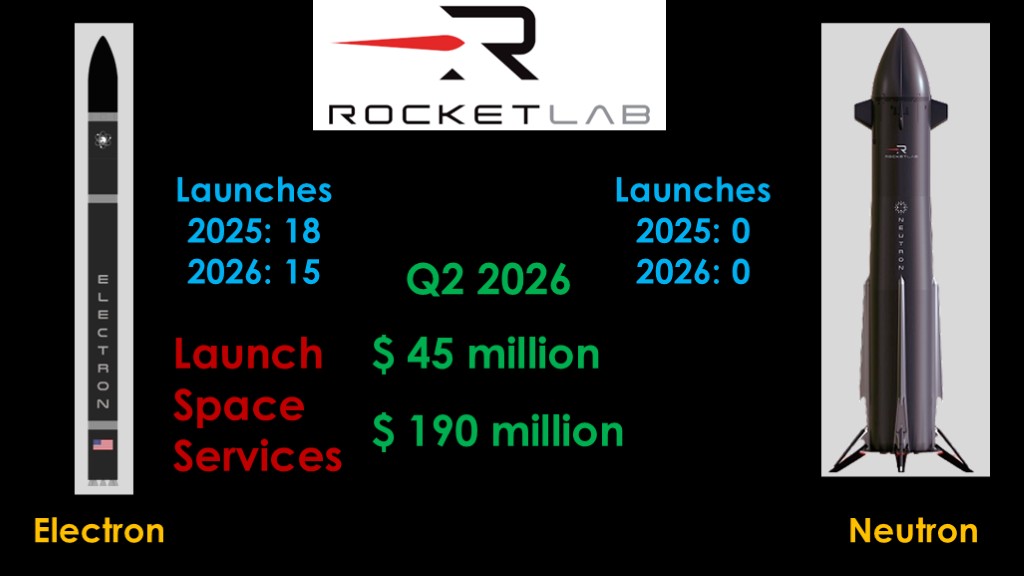
In 2025 they did 18 launches of electron and so far have done 15 in 2026. Neutron of course had not launched in 2025 and... they aren't going to launch in 2026 because of a number of issues, and 2027 is their new target.
Assuming Neutron flies in 2027, Rocket Lab is in a good competitive position and will very likely be the cheapest medium launcher by a considerable margin.
In the second quarter of 2026, the launch services brought in $ 45 million. Electron launches are pretty cheap so there isn't a ton of revenue there.
Their space services segment - satellite manufacturing, satellite parts, etc. - generated about $190 million for the quarter.
Like spaceX, they are currently a company that makes more money doing other space things than launch, but those things are still about payloads.
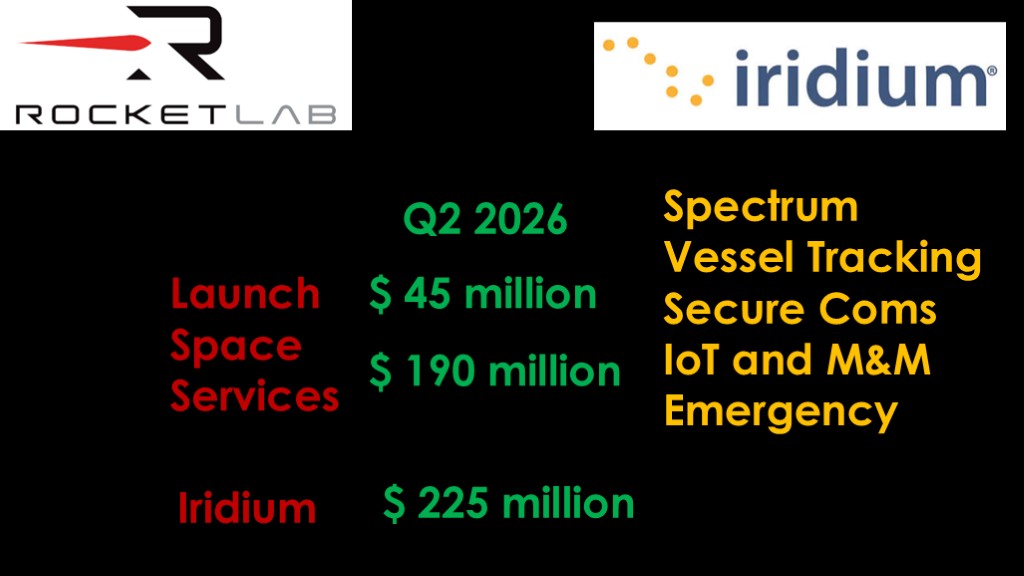
Rocket Lab has talked about having their own constellation for a few years, and in July of 2026 they announced that they were going to buy their way in, buying the Iridium satellite constellation.
Iridium gets them spectrum, a specific piece of the radio band that allows them to operate and it's a global license across the whole planet. It's L band spectrum that is much less affected by weather issues than systems like starlink.
Iridium is used for vessel tracking, secure coms for the military, internet of things and machine to machine communication, and emergency notification. Unlike Amazon Leo and Blue Origin's TeraWave, they are not currently in direct competition with Starlink.
Iridium brings in about $225 million a quarter in revenue and it is profitable.
Rocket Lab is still one of the front runners in my evaluation but they really really need to start flying Neutron.
Stoke is the second likely SpaceX competitor I identified.
Stoke is different in that they decided they would go for full reusability from the start and had a very different idea than SpaceX on how to achieve it.
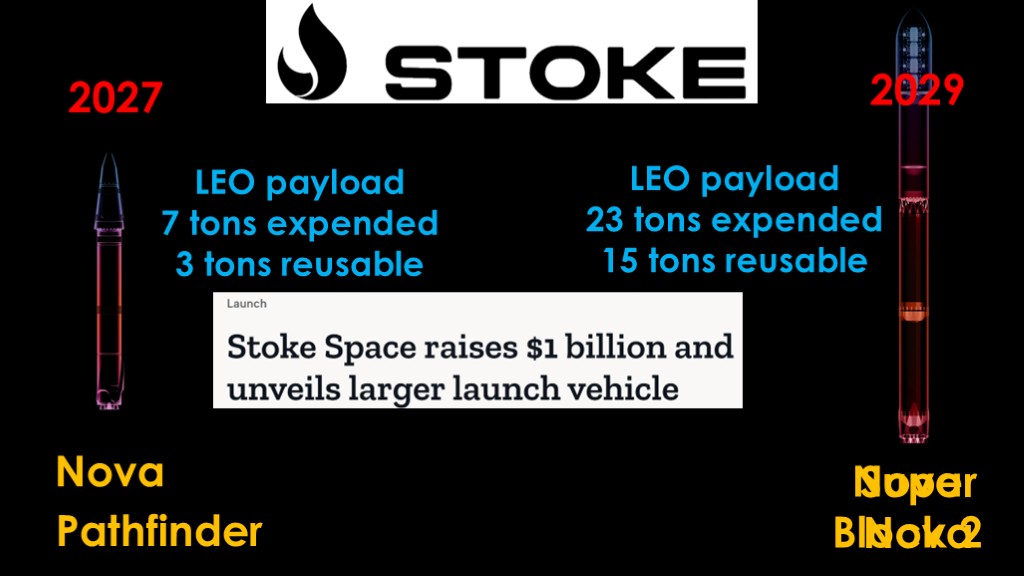
For a long time we didn't have good estimates for what the payload would be for the stoke Nova rocket. We have since learned that it's 3 tons to LEO fully reusable, 7 tons expended (not sure if that is fully expended or second stage expended).
That's a medium lift rocket but barely and much of the market wants LEO payloads in the 15 ton range.
They need a bigger rocket and they announced it in September of 2026. The new rocket is of course named super nova and it is a much bigger rocket...
And it's named nova block 2 rather than super nova. I'm not excited about the name because a block revision generally means a small change, and this change goes from the 40 meter rocket with 7 engines they now call pathfinder to the 70 meter vehicle with 14 engines on the first stage.
Their LEO payload goal is 23 tons expended and 15 tons reusable with block 2.
Stoke had a recent series E funding round where they raised a further $1 billion, raising their total to $2.3 billion. They have said that they had enough money to fly the pathfinder and this new funding will get Block 2 flying. I think they are smart to get the money now when the market is hot after the SpaceX IPO and they can get a big chunk of money cheaply, money that might not be available in the future.
They plan to fly Nova pathfinder in 2027 and block 2 in 2029, which should give them a good couple of years of experience with the smaller rocket.
That's going to put them a couple of years behind their competitors assuming things stay static, which they never do.
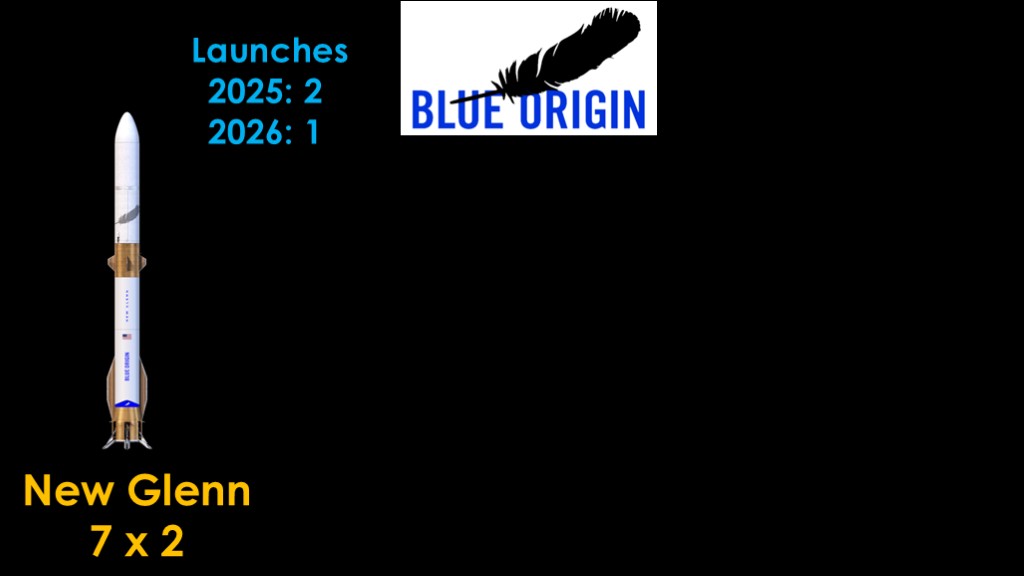
New Glenn Classic - the 7 x 2 engine variant - flew twice in 2025, carrying very light payloads successfully. The second flight landed the booster on their recovery ship Jacklyn.
And then things started to go downhill in 2026. In April, they launched a very light BlueBird satellite - only 6 tons - for AST mobile, but they had a second stage engine issue and left the satellite in a 266 km x 465 km orbit and not at the expected inclination. That was too low for operations and the satellite was deorbited.
The next flight was to be the first heavy lift payload, with 48 Amazon Leo satellites for a mass of about 27 tons, just over half of the advertised payload of 45 tons.
Unfortunately, on May 28th they "experienced an anomaly" during an engine test which led to the destruction of the first and second stages and much of the launch site infrastructure.
They are working as fast as they can to rebuild the launch site, and are aiming to conduct their next launch before the end of 2026. That seems pretty fast - it took SpaceX a full year to rebuild SLC-40 when Falcon 9 exploded during a test in 2016, though SpaceX had the luxury of having LC-39A in florida and a pad in Vandenberg.
It will take both exceptional work and luck to fly again before the end of the year, but if they don't they will likely fly in the first quarter of 2027. At that point, they'll need to work hard to get to the flights rates they are targeting. I'm hopeful and yet skeptical as ramp up is always challenging.
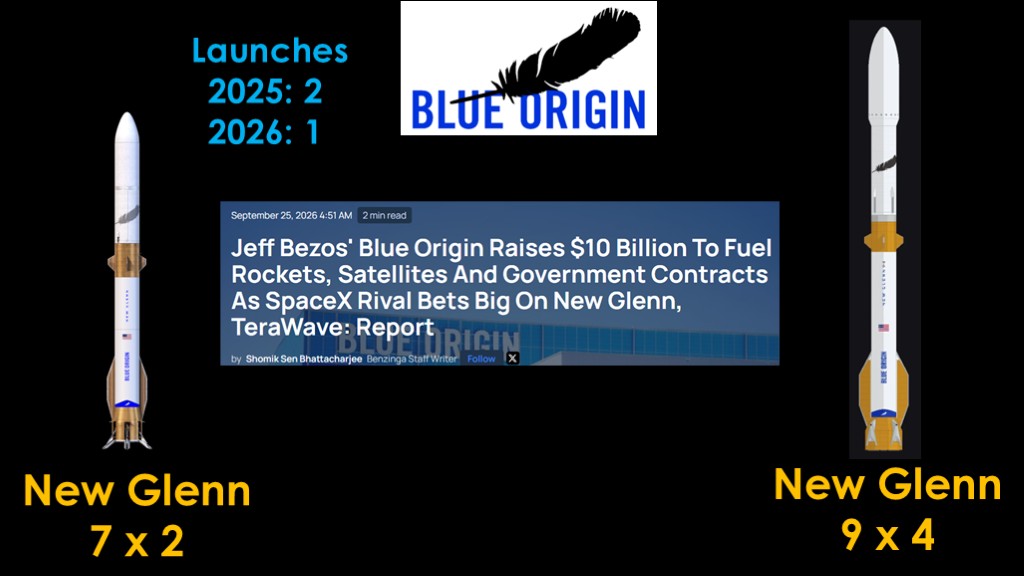
Like stoke, blue origin is working on a heavier 9x4 variant with an asserted payload of over 70 tons.
And like stoke, they had a big funding round - their first - that raised $10 billion, and there has been talk that they will also go public in the near future.
I can understand why, after spending a reported $32 billion of his own money, Jeff Bezos would want some outside investors for what Blue Origin is doing.
What I don't understand is what these investors are thinking buying into the idea that Blue Origin is worth $140 billion.
Blue owns one of the rockets that will be launching satellites for Amazon LEO. They have a small part of the NSSL launch for the department of defense (though that is likely to expand in the future with the Falcons leaving the market). They have a lunar lander. And they are planning to launch the third LEO communications constellation at some point, which means they are competing with two established competitors, Starlink and Amazon LEO.
They have a very expensive approach to launch and I think they are a long way from profitable.
I very much want another efficient company doing big things in space, but I have yet to see signs that they have the corporate DNA to do that.
On to ULA. Sigh...
Back in 2025, I asserted that ULA had a decent chance of grabbing a lot of the Amazon LEO business by leveraging their expertise and flying Vulcan a lot...
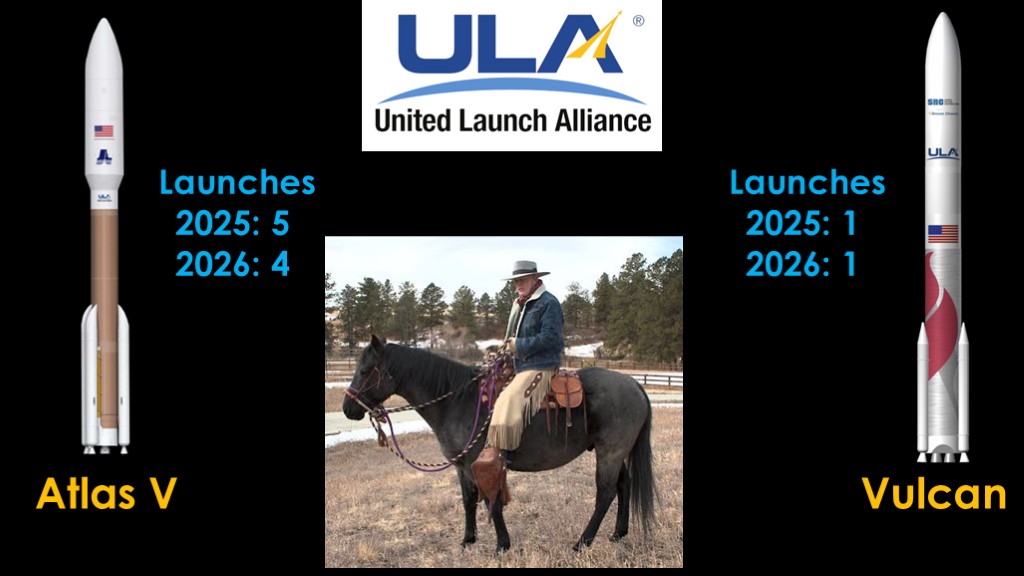
ULA is flying out their remaining stock of Atlas V. It flew 5 times in 2025 - 4 launches for Amazon LEO and a ViaSat communications satellite. They launched 4 sets of Amazon LEO satellites in 2026, completing their Atlas V commercial launch series.
The last six Atlas V are allocated to Starliner launches.
Vulcan did a successful return-to-flight launch of a space force payload in August of 2025 after the solid rocket booster anomaly in October of 2024.
For some reason, it took then 6 months for their next flight. They successfully launched a space force payload in February of 2026 but had another solid rocket booster issue which led to the space force pausing launches on Vulcan until the issues are figured out.
There was a successful test firing of a modified SRB in April of 2026 and they have a plan to launch 40 Amazon Leo satellites on October 29th.
To make things worse for ULA, CEO Tory Bruno rode Indigo the Rocket Horse to greener pastures at Blue Origin in December of 2025.
I think there's a decent chance they get a flight off before the end of the year and I expect the next few flights to be the same to prove out the SRB fixes before Space Force launches will continue. They currently have a huge backlog of space force launches.
I'm not confident in their ability to fly Vulcan often, as so far they've demonstrated that they can't do it.
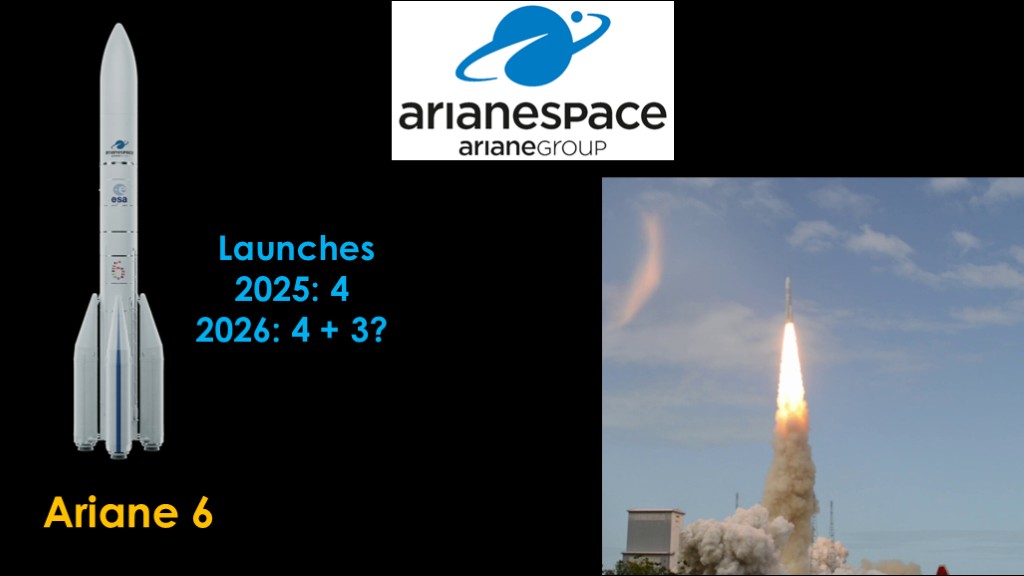
Ariane 6 flew 4 times in 2025 and has flown 4 times in 2026 with three more flights on the manifest for the rest of 2026.
In 2025 I thought that Ariane 6 would be lagging behind the trio of Neutron, New Glenn, and Vulcan and those three would be flying most Amazon Leo launches.
And here we are in October of 2026 and Ariane 6 is the only launcher of that group actually flying missions, and they are the main launcher of Amazon LEO satellites with an even 100 now that Atlas V is done. They have another Amazon LEO mission scheduled before 2026 is over and they are scheduled to fly an uncertain number of Amazon LEO missions in 2027 (I've seen numbers from 7 to 13 flights).
Ariane 6 isn't a cheap launcher but neither are Vulcan or New Glenn and I expect Ariane 6 will do well in the commercial launch space without Falcon 9 around.
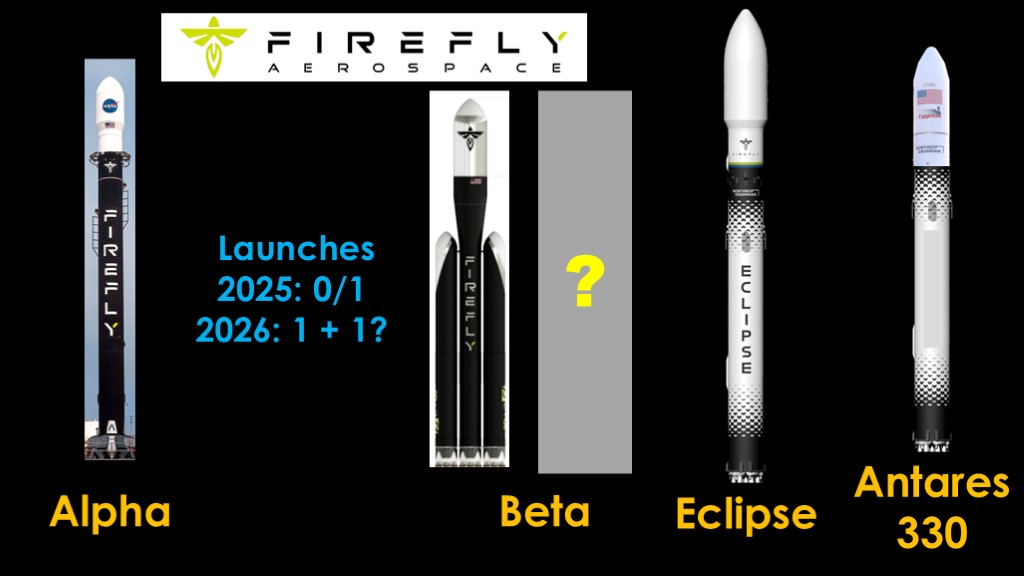
Firefly's launch division is a little confusing...
Alpha - with roughly 1 ton to low earth orbit - launched once in April of 2025 and failed during staging. The last block 1 Alpha launched successfully in March of 2026 , and the first launch of the block 2 version is scheduled to launch by the end of 2026.
Their bigger rocket has a bit of a story...
It started as a triple core version of alpha named beta, then there was briefly a single core larger version also named beta, and then the current version which is named Eclipse, though you'll sometimes hear it referred to as "medium launch vehicle".
Think "early Falcon 9" when you think of this rocket. 7 first stage engines, 1 second stage engine, both running on RP-1 kerosene and liquid oxygen, with return to launch site reuse in the plans. 16 tons to low earth orbit, which seems optimistic with return to launch site reuse. It will enter a crowded medium launch market.
And just to make things a bit weirder, take an Eclipse, remove the second stage, replace it with a Castor 30B solid rocket motor from Northrop Grumman - firefly's partner in eclipse - and you have the Antares 330, all ready to take a Cygnus Capsule to the international space station.
The Antares 330 will likely be an attractive options to all the commercial customers who flew on the Antares 230, of which there are none - it only flew Cygnus for ISS resupply missions. I think the Antares 330 is a way for northup Grumman to fund their solid rocket motor division and have NASA pay for it.
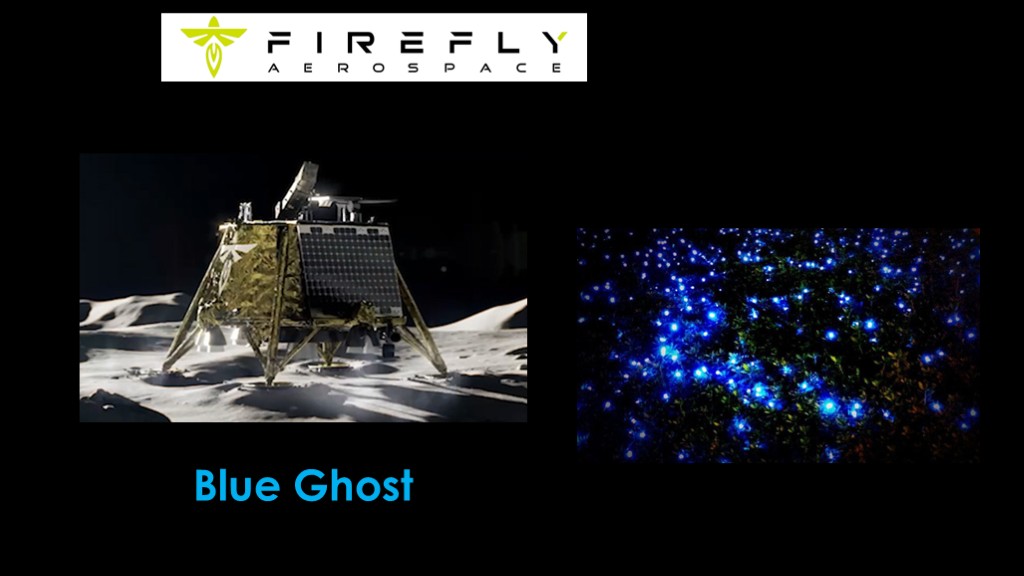
Firefly also produced Blue Ghost, the only CLPS lunar lander that stayed upright after landing.
And this is not firefly trying to name it in a way to confuse it with a blue origin product, it's named after a firefly known as the blue ghost.
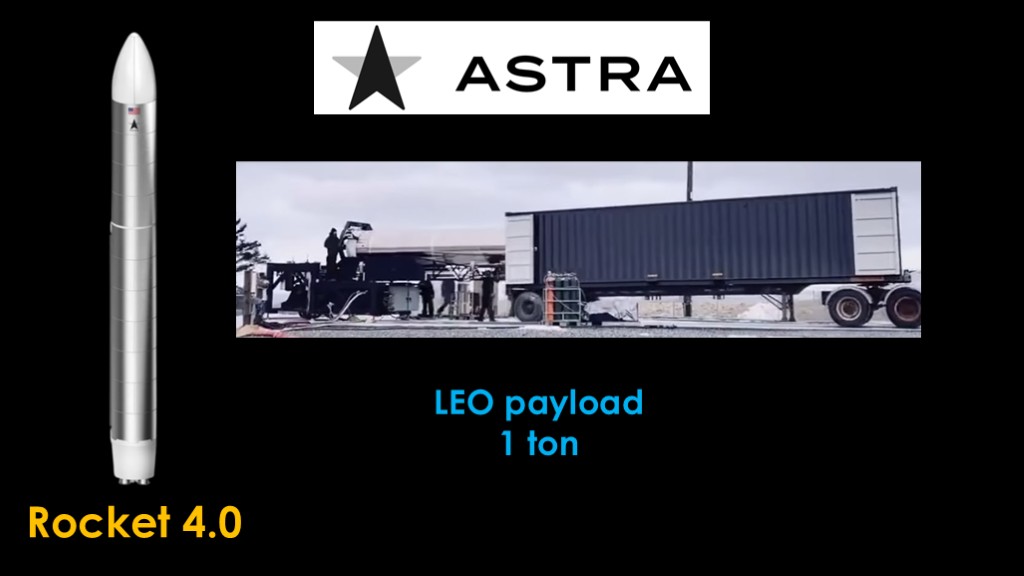
Astra is from the old school world of rocket companies, with their upcoming rocket 4.0 using 2 Reaver engines from Firefly (modified and renamed to "Chiron" (kye ron ) in the first stage and a single Hadley upper stage engine from Ursa Major. Both are liquid oxygen and RP-1 engines.
Their target payload is 1 ton to low earth orbit - bigger than Electron and Alpha but not a lot bigger.
You might ask why they would want to enter that market as there doesn't seem to be a ton of business, but Astra's rockets are containerized. Everything you need for a launch fits in a series of standard shipping containers - the rocket, the launch tower, the propellants, the launch control system - and that allows them to be shipped to wherever somebody wants to do a launch.
I don't think there's a ton of commercial demand for that service but it's exactly the sort of thing that militaries want. One obvious use is to be able to launch ballistic targets from Alaska for tests of ABM systems.
Astra believes that they will be able to build a small and simple expendable rocket cheaper than a reusable one, and they may be right. They will be competing with Electron a bit but they have some unique capabilities.
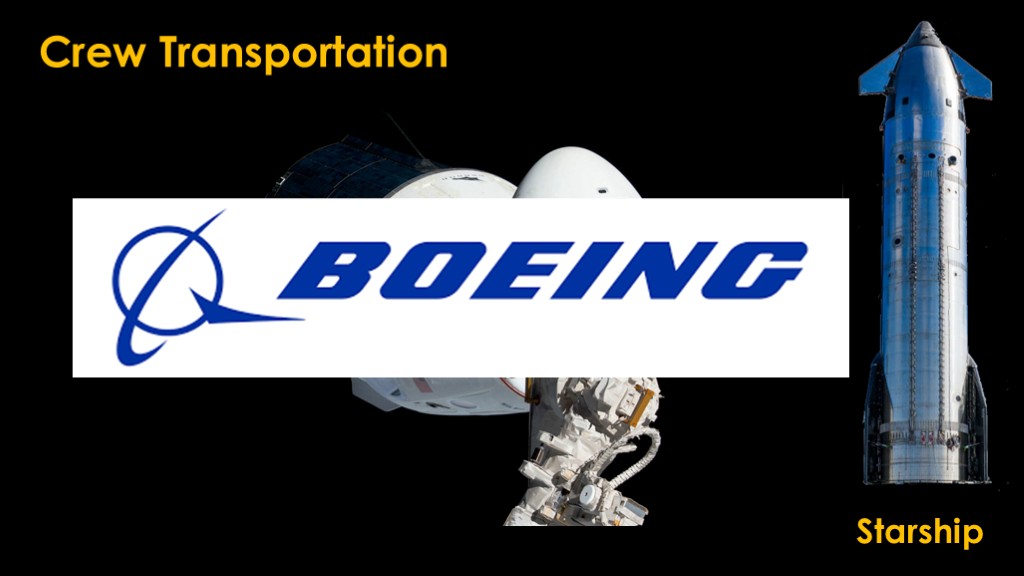
The only operational crew capability in the US is crew dragon, and it's a Falcon 9 vehicle. And the two major ISS resupply vehicles - cargo dragon and Cygnus - both currently fly only on Falcon 9.
I did mention earlier that NASA is freaking out about falcon 9 retirement.
Despite the prestige of carrying humans and supporting ISS, SpaceX is walking away from both of those markets.
We might see people flying on starship at some point but I don't see SpaceX wanting to service the space station transportation market with it.
The only credible near term option to replace crew dragon is a spaceship that rhymes with tar - whiner, and that will make one particular company pretty happy.
But that's a topic for another video.
And that's all for my look at launch for 2026.

Today's song is Atom Heart Mother by Pink Floyd from the 1970 album of the same name.
https://www.youtube.com/watch?v=rR0y06jvJhU